🚀 Kaspa Toccata: What’s Changing and Why It Matters

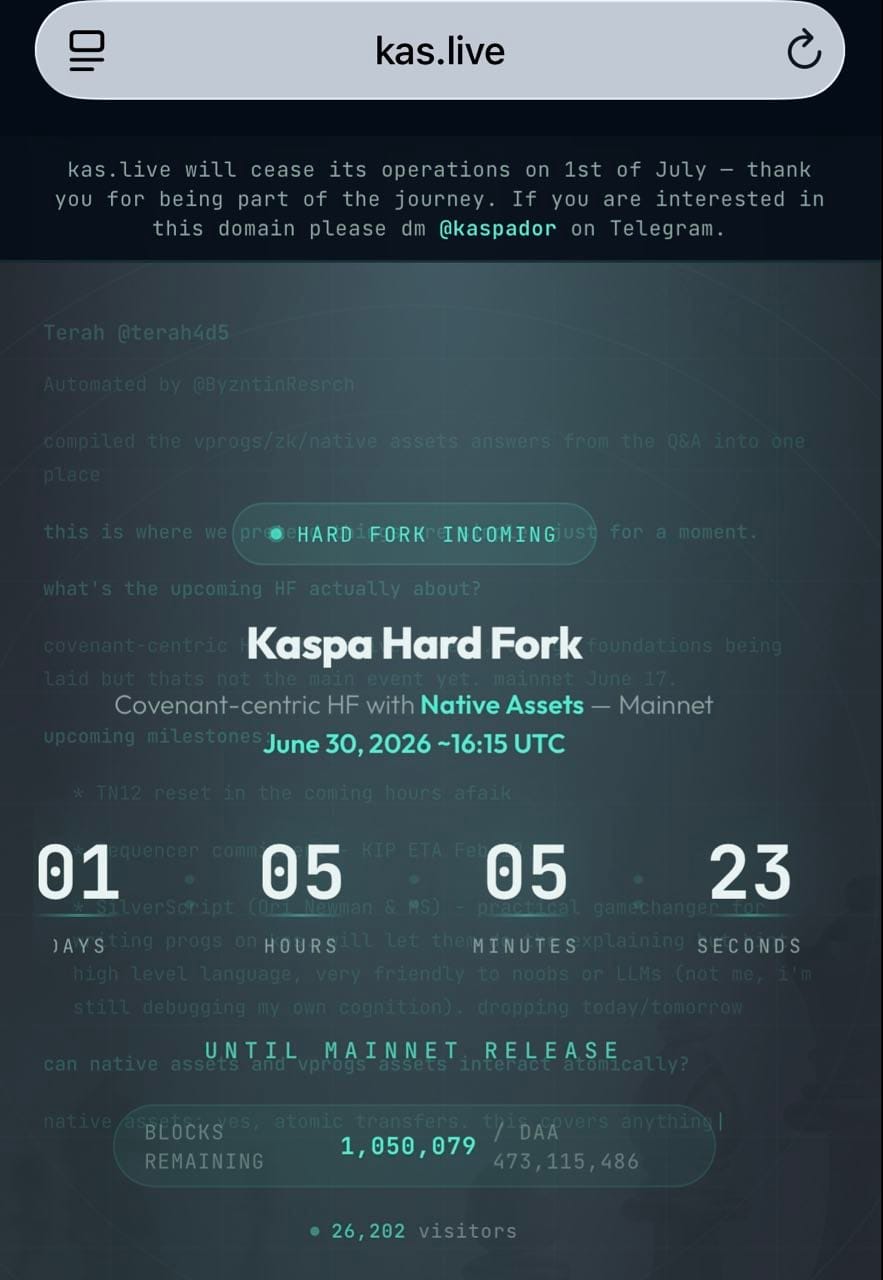
I’ve hesitated to write about this hardfork for a long time because, frankly, it’s a lot to process. But this is crucial - it partially explains why I believe in Kaspa. I highly recommend taking a moment to really think through this.
Important note: This is my personal understanding of the update, and I welcome any technical discussion if I’ve missed a nuance.
💡 The Simple Version:
Before Toccata, Kaspa was optimized for one thing: sending coins incredibly fast and cheap via a PoW algorithm. Essentially, a "Bitcoin 2.0." Everything else (tokens, apps) existed in experimental modes or as L2 overlays.
Toccata integrates three pillars directly into the protocol (L1):
1. Native Token Standard: Tokens previously relied on external protocols; now, the standard is built into the core engine. For projects, this means fewer "workarounds" and significantly higher reliability. 🛠
2. Programmable Transactions: Developers can now set logic directly on Layer 1 - timelocks, conditional payments, and vaults. This is the foundation for DeFi without needing a separate smart-contract layer like Ethereum.
3. ZK-Application Infrastructure: The network is gaining the ability to verify cryptographic proofs. While not a full launch yet, it’s the foundation for private transactions and massive L2 scalability in the future. 🔐
The Bottom Line: Kaspa is evolving. It keeps its identity as a "fast Bitcoin" but becomes a powerful platform for builders - all while remaining a PoW network with its signature security.
🌍 What This Means for the Crypto Community
We are looking at full-scale DeFi, stablecoins, and lending protocols built directly on Kaspa without compromises.
Kaspa is claiming a niche that no one else truly owns: A PoW network with native programmability.
- Ethereum is programmable, but it's PoS.
- Bitcoin is PoW, but not natively programmable.
Kaspa is merging both worlds, and Toccata moves this from a "marketing narrative" to a technical reality. 💎
⛏️ Fees and Miners: The Hashrate Strategy
This is the answer to the big question: How do we sustain the hashrate long-term?
With Toccata, the minimum fee increases 100x (from 1 to 100 sompi/gram). All fees in Kaspa go directly to the miners. 💸
As activity moves from external L2s to the native L1, those transaction fees no longer sit with L2 operators - they flow to the miners. By 2026, ~95% of Kaspa’s total supply will be issued, and block rewards will be very low.
Higher L1 Activity ➡️ More Fees ➡️ Better Mining Profitability ➡️ Higher Hashrate (Network Security).
Toccata ensures that even when new coins stop being minted, the network remains economically incentivized to stay strong.
Originally posted on Telegram channel.