Trading Psychology: How to Stay Calm in Any Market Condition

Water is wet, fire is hot, and psychology is a crucial part of trading – I don't think anyone would argue with that. I've been trading various financial instruments on and off since 2007, and consistently since 2013. Over time, I've developed a few approaches that really help and simplify my trading life. I'll try to share a couple of them.
One key thing is to put yourself in a position where almost ANY market movement won't cause you psychological discomfort. On the contrary, this price action should make you feel good. How does that work? Let me show you with examples.
Take my Bitcoin strategy. As I mentioned, I don't plan to exit completely, but I am fixing a part of my position now based on my market view. So, what happens? If it goes up, I'm happy because I still hold the asset. If it goes down, I'm happy I sold some for profit and can buy back cheaper.
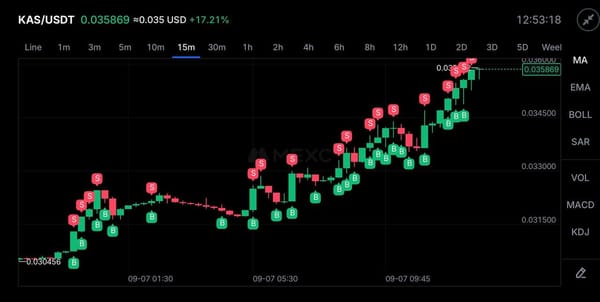
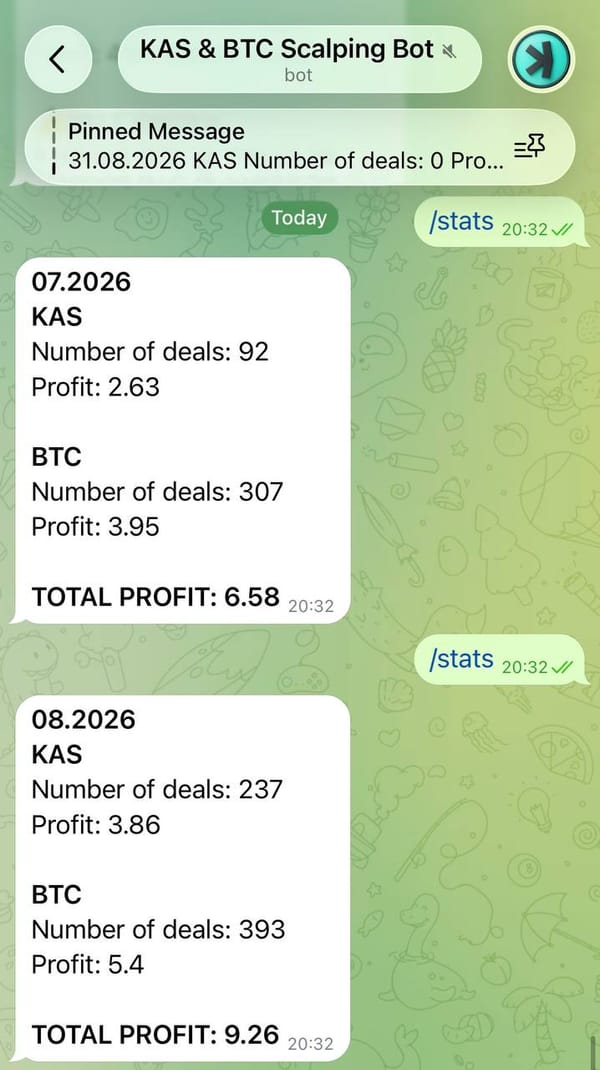
Let's look at @KAS_USDT_BOT. Is the market volatile but without a clear trend? Great, we're making money. Is the market going up? Awesome, our orders are freeing up, giving us available USDT. What if the market goes down? Still good! We're accumulating more coins, lowering our average price – you can't make a profit without that. And after about 3-4 months, based on my experience, it all evens out. The profits start to outweigh any temporary dips in the coin's value. If I'm already in profit, why worry? Let it keep working and earning more.
Next, it's important not to inflate, but rather to lower your expectations for returns and timelines. Also, never trade with money you can't afford to lose. This reduces pressure and psychological stress, helping you avoid situations where you feel you "have to win back" or "urgently make money." Those feelings often lead to impulsive, rash decisions. I know for a fact that when I'm under pressure, I make silly mistakes. The takeaway: try not to get into situations where you'll feel pressured. Don't set unrealistic goals like "I need to double my money by X date" with some crazy percentage return. That's just not how it works.
With Kaspa, for example, if I had set a goal to double my investment in two months because I needed that money for something - I'd be pulling my hair out! I'd be checking prices daily, asking myself, "When? Why? What should I do?" But my approach is different. I'm confident it will grow over a 10-year horizon. Along the way, it might drop significantly (I actually did a small study on this recently and will share it soon). What does the current price matter if I'm not selling now? If it's cheap, even better - it's a chance to buy more. And over 10 years, I'm sure there will be periods when it hits my target price range. I don't need this money tomorrow for daily expenses. Mentally, I've already said goodbye to it. So when it does grow, it'll be a nice bonus.
Earning a living solely from trading is incredibly tough, with a very small percentage of successful people. Earning extra income, however, is much simpler – it's more like a hobby, a game with numbers.
Another tip: don't go "all in" on one trade, and don't make just one single transaction. Related to this, don't try to perfectly time market extremes. Yes, Bitcoin went from around $15,400 in November 2022 to $123,000 this summer. That's an 8x gain! But did you know $15,400 was the absolute bottom at that moment? And why didn't everyone sell everything at $123,000? Nobody knew. We can only roughly outline target zones for buying and selling. By methodically buying and selling within these zones, we improve our average prices and avoid the discomfort of feeling like we "missed out" by not getting the absolute best price.
I guess I've ended up describing the benefits of a DCA (Dollar-Cost Averaging) strategy. In any case, focus on and be happy with your actual profits, rather than dwelling on how much you could have made or what you missed. You wouldn't have been able to get it all anyway, no one could.
I've written seemingly obvious things, most of which I knew when I started. But did I use them? It's almost mystical - your brain knows, but in practice, you don't apply it initially. So, if anyone reads this and something "clicks" for them, making their trading journey much simpler, I'll be very happy.
Thanks for reading my stream of thoughts to the end!
Originally posted in Telegram channel.